

America's Test Kitchen
On knowledge, judgment and wisdom.

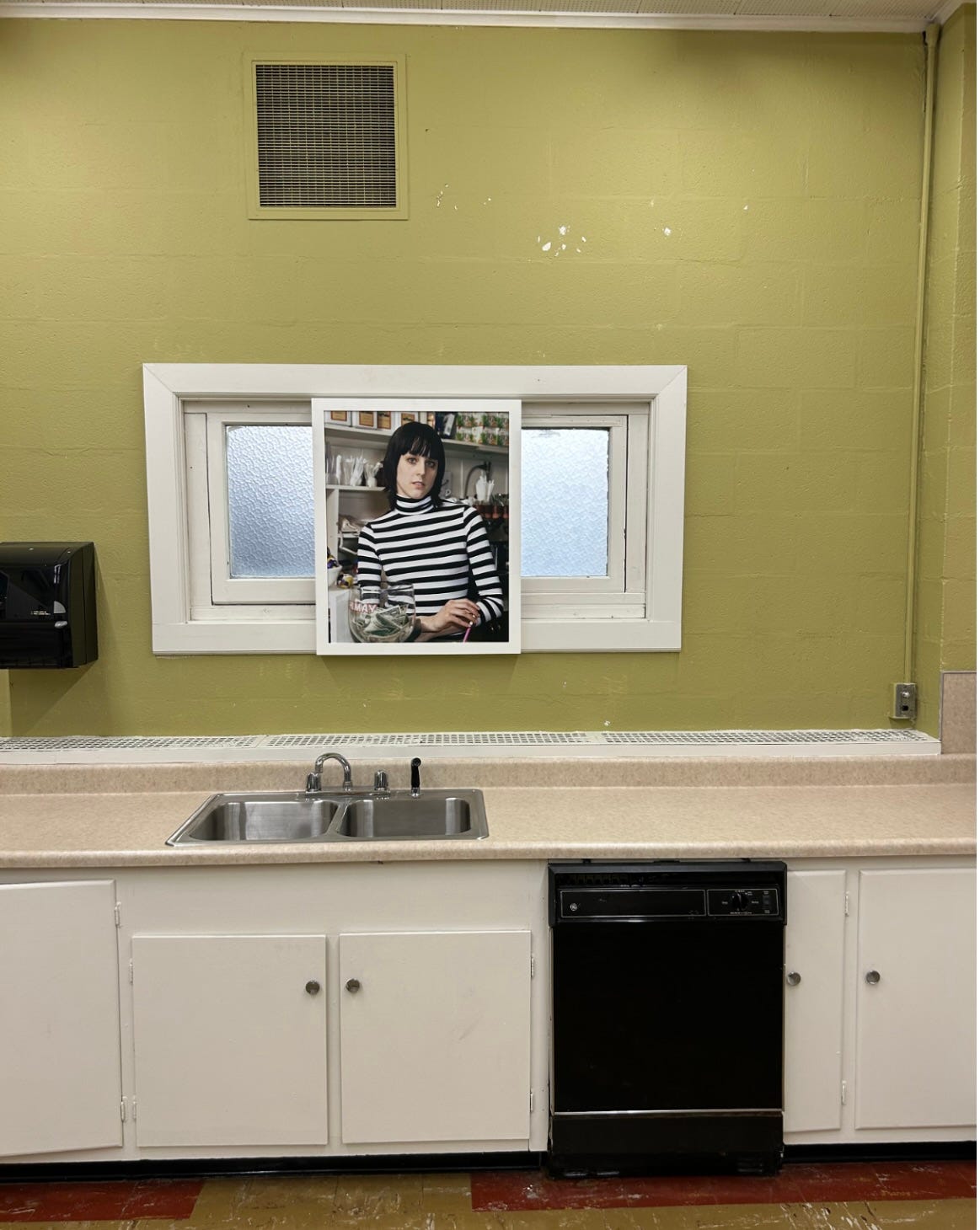
At the beginning of this week, it was brought to my attention that my portrait is currently residing in a test kitchen at The Campus in Hudson, NY. The test kitchen felt appropriate to me; a metaphor for the life it is like to live—full of hypotheses, mixing ingredients and careers, and creating a life from scratch.
It’s also an apt metaphor for how I’ve described what the last 14 years of consulting have taught me about business growth. As I weave the lessons sitting with thousands of entrepreneurs have taught me into a single platform, what I know for sure is that businesses don’t fail because they lack information (how to price my product, how to hire properly, where to find customers). That information is at your fingertips even without AI. It’s all over the internet. You do not need an MFA to succeed.
What entrepreneurs lack is not access to information.
What they lack is the ability to metabolize all of the information they receive: from their customers, from their team members, and most importantly from their own minds and bodies if they are wise enough to listen.
Like life itself, survival in entrepreneurship depends less on what information enters your system and more on how you break down, absorb, integrate, or discard it.
The metabolism is where knowledge meets judgment, and when judgment is digested over time, wisdom is revealed.
Judgment is the ability to perceive what matters, in this situation, right now. Most entrepreneurs I work with don’t lack knowledge; they lack the practice of judgment. Instead of developing the practices of judgment, they outsource their decisions to other people’s perceptions: how they are seen by their employees, their peers, their investors, even their families.
Judgment requires a foundation. It requires a level of self-knowledge and self-awareness beyond the surface.
Judgment requires you to know what you actually value before the world told you what to value. It requires enough self-awareness to distinguish conviction from ego, intuition from fear, and signal from noise.
Most days in entrepreneurship feel like stepping into a test kitchen. You know what’s in the pantry, but you’re never quite sure of today’s recipe. The ingredients may be the same, but the conditions are always changing. The temperature changes. The humidity changes. The market changes. You change. Recipes can teach technique, but they can’t account for every variable. Financial plans and operating systems are like recipes. But if you outsource your judgment to them, they will not work for you.
Every day asks you to decide what to keep, what to adjust, what to discard, and what to trust. To make something meaningful with the ingredients you have—not the ones you wish you had.
Twenty-one years ago, a really cute photographer walked into Marlow & Sons with his 8x10 while I was behind the counter. I had left my career in music therapy months before because, despite how much I loved the work, the ingredients no longer added up to the life I wanted to build. So, against everyone’s advice, I trusted my judgment and leaped into waitressing.
It was a Monday morning when Roe set up his camera. I was still wearing Sunday night’s makeup. Roe turned the Chimay glass in front of me so it simply read, “May”—a nod to when this portrait would eventually hang.
Neither of us knew that “May” would become another leap for me. It was the same month I was accepted into Columbia’s pre-med program and took another leap, this time into medical research at Lenox Hill. Again, against the advice to take on 100K in student loan debt, I leaped.
Looking back, that’s what judgment has always asked of me.
Not certainty. And certainly not external validation.
Just the willingness to honestly assess what the current conditions require, trust what my own metabolism is telling me, and begin mixing the ingredients again.
That’s what entrepreneurship is. A series of test kitchens. The ingredients evolve, the environments change, and so must we. Tune out the noise: of your peers, your industry, your well-meaning loved ones. Ask yourself: how much do you really know about your own sense of judgment? How do you derive it, how do you practice it, what happens when you follow it? What wisdom have you gained not because of that book you read, but because of the path you walked? That will matter more for you in the long run.
May you be Thunderstruck by this Full Thunder Moon. May it illuminate the places where you’ve mistaken someone else’s recipe for your own. May you find the courage to trust your judgment, change the ingredients, and begin again.